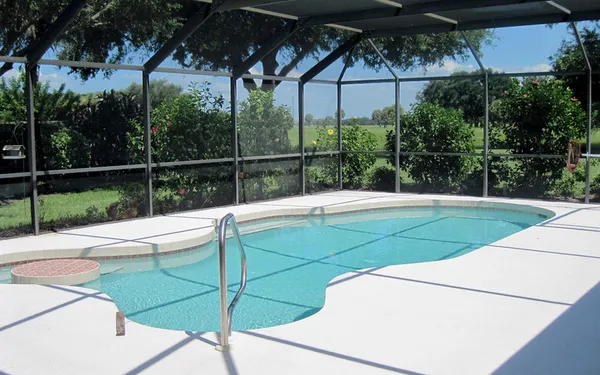
Your pool cage protects your outdoor space from bugs, debris, and harsh weather. But like anything exposed to Florida’s sun, rain, and humidity year-round, it won’t last forever.
The good news? Most pool cage problems start small. Catch them early, and you’re looking at a simple repair. Ignore them, and you might be facing a full replacement.
Here are the five warning signs every Southwest Florida homeowner should know.
1. Visible Tears or Holes in the Screen
This one seems obvious, but you’d be surprised how many homeowners overlook small tears, especially up high or in corners.
What to look for:
- Small holes from debris or wildlife
- Tears along the edges where screen meets frame
- Sagging or stretched areas that could tear soon
Why it matters: A small tear today becomes a big hole after the next storm. And once bugs find their way in, your pool cage stops doing its job.
The fix: Small tears can often be patched. Multiple tears or large damaged areas usually mean it’s time to rescreen that panel, or the whole enclosure if the screen is old and brittle throughout.
2. Rusty or Corroded Hardware
Your pool cage frame is aluminum (which doesn’t rust), but the screws, bolts, and other hardware often aren’t.
What to look for:
- Orange or brown staining around screws
- Screws that have corroded and no longer hold tight
- Rust streaks running down the frame from hardware above
Why it matters: Corroded hardware weakens the structure. A screw that’s rusted through won’t hold during a storm. And rust stains are nearly impossible to remove from aluminum, they’re permanent.
The fix: Replacing hardware is straightforward if caught early. If corrosion has spread or hardware has failed completely, you may need frame repairs too.
3. The Frame Feels Wobbly or Unstable
This is the one you really can’t ignore.
How to test: Stand inside your enclosure and gently push on the frame at various points, posts, beams, door frames. Everything should feel solid.
Warning signs:
- The whole structure sways when you push
- Individual posts move independently
- You hear creaking or popping sounds
Why it matters: A wobbly frame is a structural problem. It could mean:
- Footers have shifted or cracked
- Connections have loosened over time
- Previous storm damage weakened the structure
The fix: This isn’t a DIY situation. A wobbly frame needs professional assessment. Sometimes it’s a matter of tightening connections. Other times, it indicates the frame is failing and replacement is the safer choice.
4. Screen Doors Don’t Close Properly
Pool cage doors take a beating. They’re opened and closed thousands of times, exposed to the elements, and often bumped by pool equipment or furniture.
What to look for:
- Doors that stick or drag on the track
- Latches that don’t align anymore
- Gaps when the door is “closed”
- Doors that won’t stay latched
Why it matters: Beyond the annoyance, doors that don’t seal properly let bugs in and can blow open during storms, potentially damaging the frame.
The fix: Sometimes door issues are simple adjustments, realigning the track or replacing worn rollers. Other times the door frame itself is bent and needs replacement.
5. White Powdery Residue on the Aluminum
Notice a white, chalky substance on your aluminum frame? That’s oxidation, essentially aluminum’s version of rust.
What to look for:
- White powder that rubs off on your hand
- Dull, faded appearance instead of original finish
- Pitting in the aluminum surface
Why it matters: Surface oxidation is cosmetic and normal. But heavy oxidation, especially pitting, weakens the aluminum over time. Salt air near the coast accelerates this significantly.
The fix: Light oxidation can be cleaned and treated. Heavy oxidation with pitting is permanent and indicates the frame is aging. It doesn’t mean immediate replacement, but factor it into your timeline.
When to Call a Professional
Handle these yourself:
- Cleaning screens and frames
- Monitoring for changes
- Minor adjustments to door tracks
Call a professional for:
- Any structural concerns (wobbling, instability)
- Multiple screen panels need replacement
- Hardware replacement throughout
- You’re not sure what you’re looking at
The Real Cost of Waiting
Here’s what we see regularly: A homeowner notices a small issue but puts off the repair. Six months later, that small issue has become three issues. What would have been a $300 repair is now a $3,000 rescreening.
Or worse, they wait until hurricane season, and there’s no availability for weeks.
The best time to address pool cage repairs is before they become urgent.
Not sure if your pool cage needs repair? We offer free inspections across Southwest Florida. We’ll assess your enclosure honestly and tell you exactly what needs attention, and what can wait. Schedule an inspection or give us a call at (941) 676-8818.