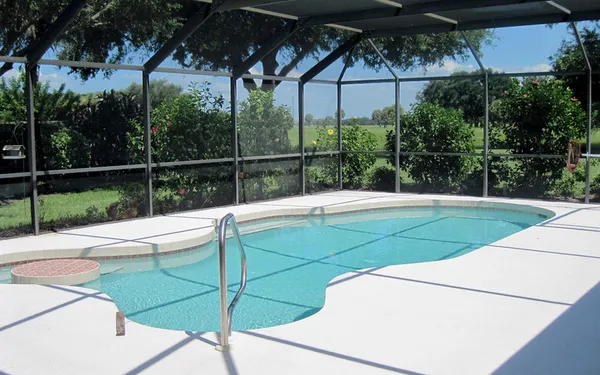
Living in Southwest Florida means dealing with hurricane season every year from June through November. Your pool cage is one of the most vulnerable structures on your property, but with the right preparation, you can minimize damage and avoid costly repairs.
Here’s what every homeowner in Charlotte, Lee, Sarasota, Collier, and Manatee counties should know about protecting their screen enclosure.
Already Mid-Season? Start Here
Most hurricane prep advice assumes you are reading it in spring. If you are reading this in August or September, you are in the busiest part of the season and the advice changes.
What is still worth doing right now:
- Photograph the enclosure today. This takes ten minutes and is the single highest-value thing you can do. Insurers pay on evidence. Without dated “before” photos, storm damage and pre-existing wear look identical on a claim.
- Walk the frame and tighten what is loose. Loose screws and lifting spline are the failure points that turn a survivable storm into a full replacement. This is homeowner-level work.
- Clear the roof panels. Accumulated leaves and branches add weight and hold water. Debris on the roof is a common reason panels blow out.
- Book any real repair now, not when a storm is named. Once a system enters the Gulf, every contractor in Southwest Florida is booked and materials tighten up. A repair that takes two days in a quiet week takes three weeks once a watch is posted.
What is no longer worth starting: a full rescreening or frame rebuild you want finished before the next storm. Those take weeks and depend on permits and inspections. Schedule them for after the season ends in November, and spend the meantime on documentation and small fixes.
The rest of this guide covers the full pre-season process, what to do when a storm is actually approaching, and how to handle damage afterward.
Before Hurricane Season: The Pre-Storm Inspection
Don’t wait until a storm is in the Gulf to inspect your pool cage. By then, contractors are booked solid and you’re out of options.
Start your inspection in April or May:
Check the Screen Panels
Walk around your entire enclosure and look for:
- Tears or holes – Even small ones can become big problems in high winds
- Loose or pulling screen – Screen that’s not taut will flap and tear
- Deteriorating spline – The rubber strip that holds screen in the frame degrades over time
Inspect the Aluminum Frame
- Corrosion or rust spots – Especially at joints and near the ground
- Loose or missing screws – These can work themselves out over years
- Wobbly or unstable sections – Push gently on posts and beams to check stability
- Cracked or bent framing – Signs of previous stress or damage
Examine the Roof Structure
- Sagging screen panels – Indicates weakened support
- Debris accumulation – Leaves and branches add weight and trap moisture
- Gutter condition – Clogged gutters cause water damage
Look at the Foundation
- Concrete footers – Check for cracks or shifting
- Ground settling – Uneven settling puts stress on the frame
Repairs to Make Before Storm Season
If your inspection reveals problems, address them in the spring rather than waiting until a Category 2 is forming in the Gulf. Repair capacity across Southwest Florida disappears fast once a storm is named.
Priority Repairs
- Replace damaged screen panels – Torn screens offer no wind resistance and will likely fail completely
- Tighten all hardware – A few loose screws can lead to structural failure
- Fix any frame damage – Bent or corroded sections are weak points
- Clear roof debris – Less weight means less stress during high winds
When Full Rescreening Makes Sense
If your screens are 10+ years old and showing widespread wear, consider a full rescreening before hurricane season. New screen installed properly is far more wind-resistant than aged, brittle material.
When a Storm Is Approaching
You’ve got 48-72 hours notice that a hurricane is heading your way. Here’s what to do:
48+ Hours Out
- Document everything – Take photos and videos of your pool cage from multiple angles. This is crucial for insurance claims.
- Remove loose items – Patio furniture, pool toys, and decorations become projectiles
- Secure screen doors – Make sure they latch properly; consider adding extra securing
24 Hours Out
- Clear the pool deck – Everything that can move should be inside or secured
- Check your documentation – Know your insurance policy details and contractor contact info
- Don’t attempt last-minute repairs – It’s too late, and it’s dangerous
What NOT to Do
- Don’t try to “reinforce” screens – Taping or boarding over screens doesn’t help and can cause more damage
- Don’t remove screens yourself – Unless you know exactly what you’re doing, you’ll likely damage the frame
- Don’t ignore evacuation orders – Your pool cage is not worth your life
After the Storm: Damage Assessment
Once it’s safe to go outside, assess the damage carefully.
Immediate Steps
- Document everything again – Photos of all damage before touching anything
- Check for structural hazards – Don’t enter the enclosure if framing looks unstable
- Look for debris – Remove branches and debris carefully to prevent further tearing
- Contact your insurance – File a claim promptly
Common Post-Hurricane Damage
- Screen blowouts – Wind-driven rain and debris tear through panels
- Frame displacement – Posts can shift off footers
- Roof damage – Flat roofs especially vulnerable to uplift
- Gutter damage – Often torn off or crushed by debris
Getting Repairs Done
After a major storm, every contractor in the area is swamped. Here’s how to navigate:
- Get on a list early – Call reputable contractors the day after the storm
- Beware of storm chasers – Out-of-state “contractors” appear after every hurricane offering quick fixes. Many take deposits and disappear.
- Verify licensing – Same rules apply: check the Florida DBPR
- Document contractor visits – Keep records of all estimates and communications
Insurance Considerations
Most homeowner’s policies cover hurricane damage to screen enclosures, but there are caveats:
- Deductibles – Hurricane deductibles are often higher (sometimes 2-5% of home value)
- Depreciation – Some policies pay actual cash value, not replacement cost
- Pre-existing damage – Damage that existed before the storm isn’t covered
This is why pre-storm documentation matters so much. Clear “before” photos prove what damage the hurricane actually caused.
Building for Resilience
If you’re installing a new pool cage or doing major repairs, consider:
- Impact-resistant screen – Tuff Screen and similar products handle debris better
- Upgraded fasteners – Premium screws and bolts improve structural integrity
- Proper engineering – Modern pool cages built to current Florida Building Code withstand higher wind loads than older structures
Year-Round Maintenance Matters
The best hurricane preparation is year-round maintenance. A well-maintained pool cage is stronger than a neglected one.
- Keep screens clean (salt and debris weaken material)
- Address small repairs immediately
- Have a professional inspection annually
Need a pre-hurricane inspection? We offer thorough assessments of your pool cage’s condition and can handle any repairs before storm season arrives. Contact us to schedule.